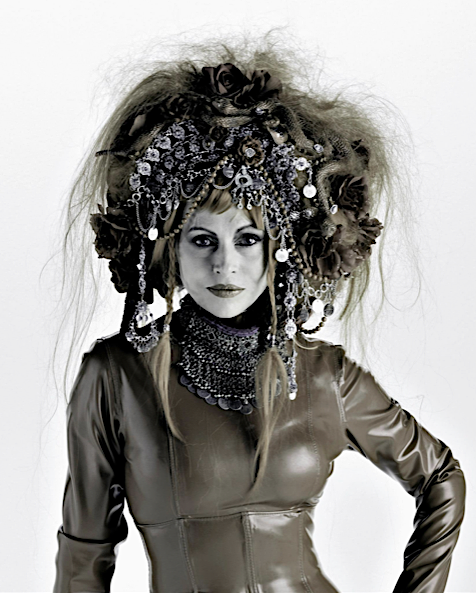
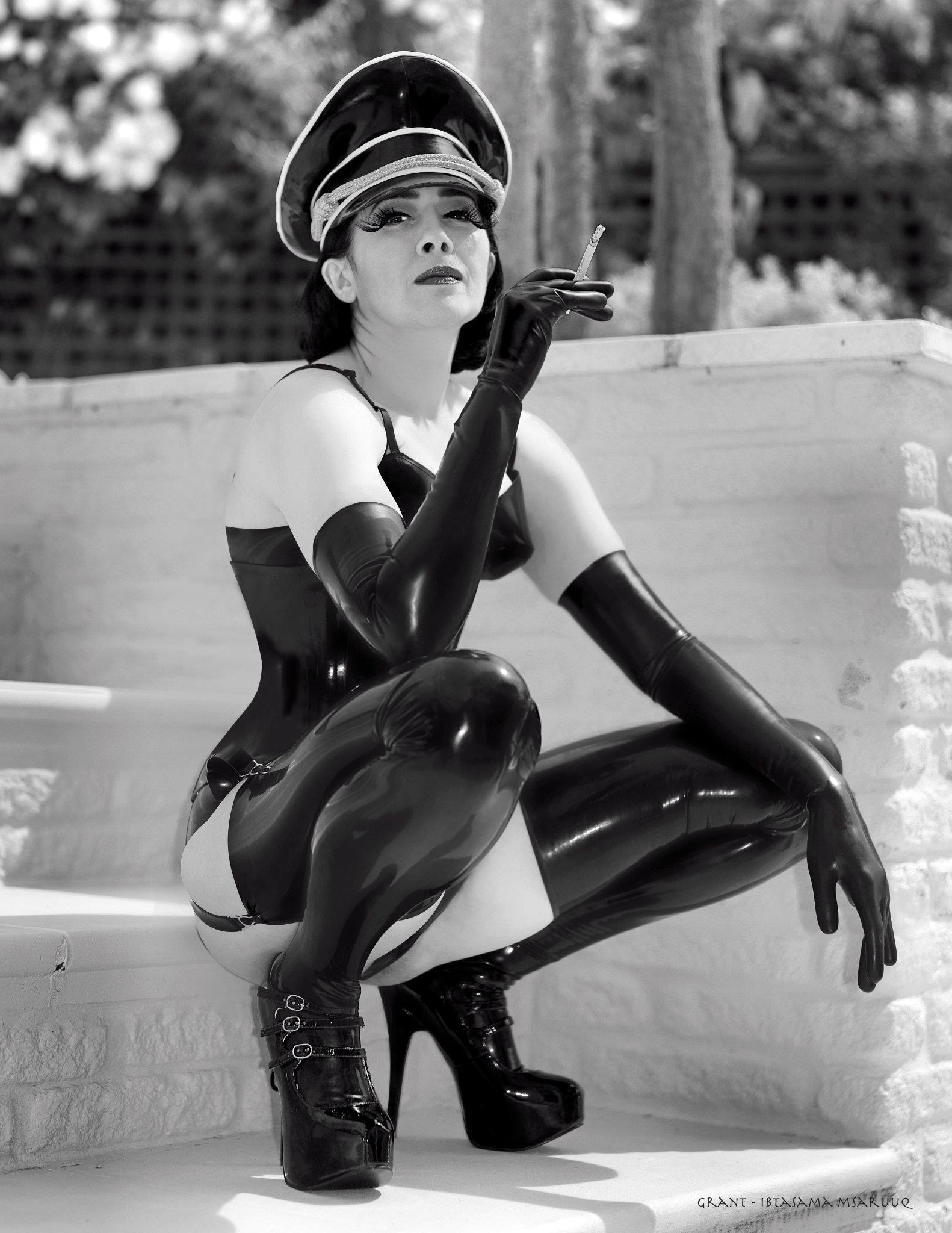
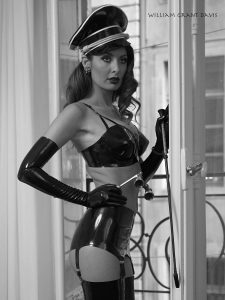
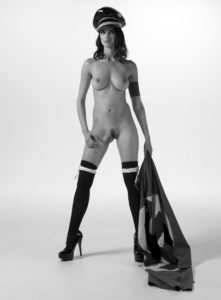
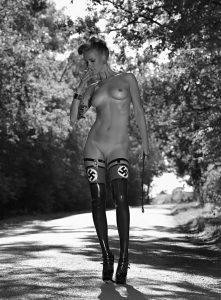
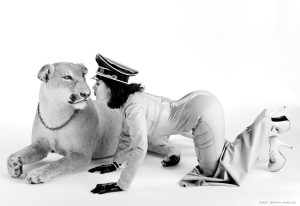
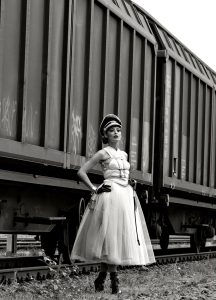
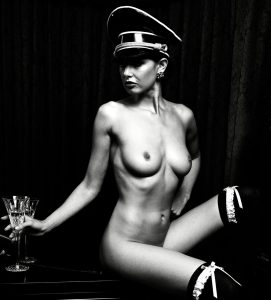
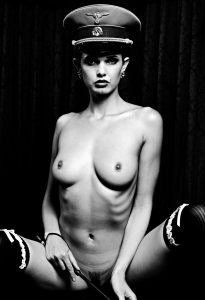
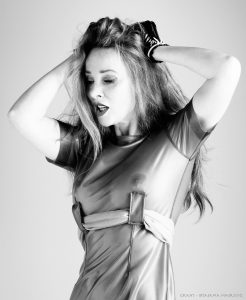
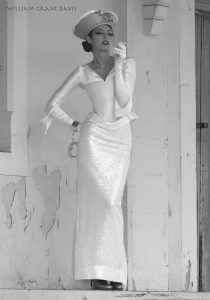
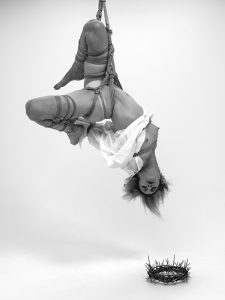
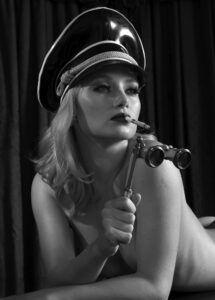
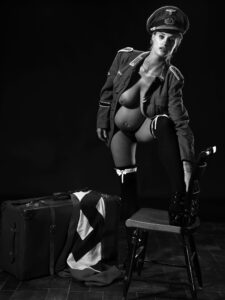
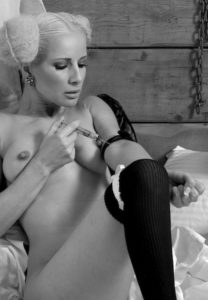
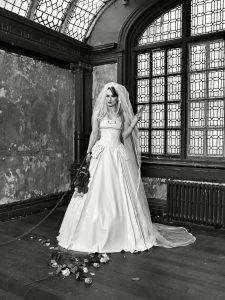
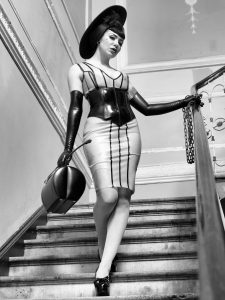
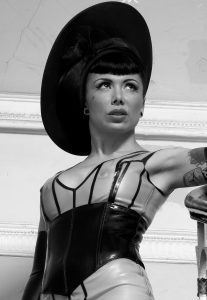
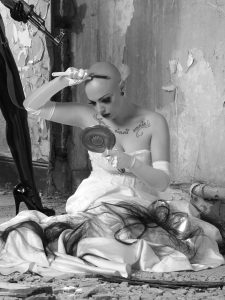
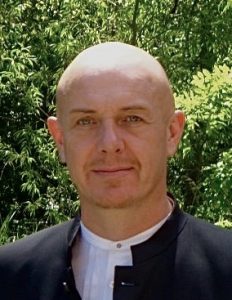
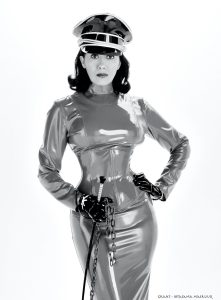
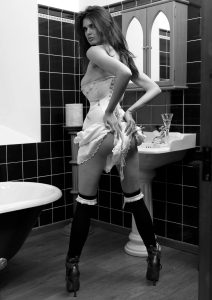
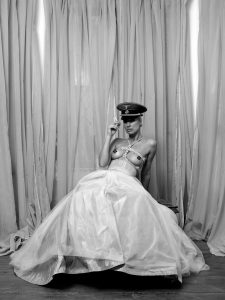
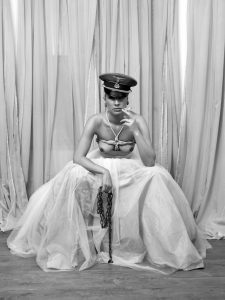
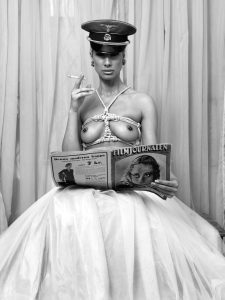
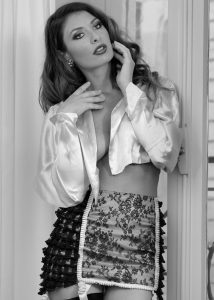
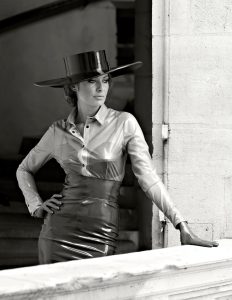
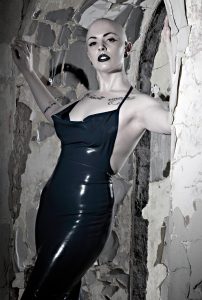
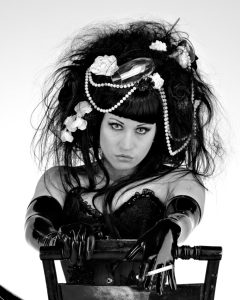
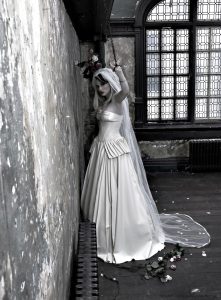
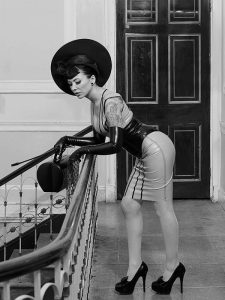
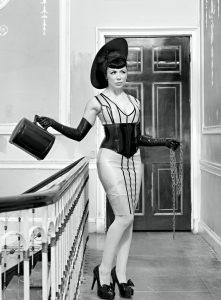
 WILLIAM GRANT DAVIS has produced Fine Art Photography for around 40 years. He specialises portraiture, detailing the dramatic and empowering female form in settings that reference stories and historical settings.
The photographer’s skill in capturing and instilling this moment in time with a tension and attention to detail is astounding.
The erotic frisson that is created between model and viewer is intentionally strong and deliberately challenging. The power and control maintained by the model is paramount in creating this very personal and special bond with the viewer.
WILLIAM GRANT DAVIS offers life size prints up to 108 x 48” to further enhance the provocative and powerful nature of his work. When it comes to Black and White images, he collaborates with Metro Imaging Limited which is the only print lab in the UK to produce true black and white Silver Gelatin prints from digital files. WILLIAM GRANT DAVIS creates portraits that capture a moment in time that is forever enticing and eternal.
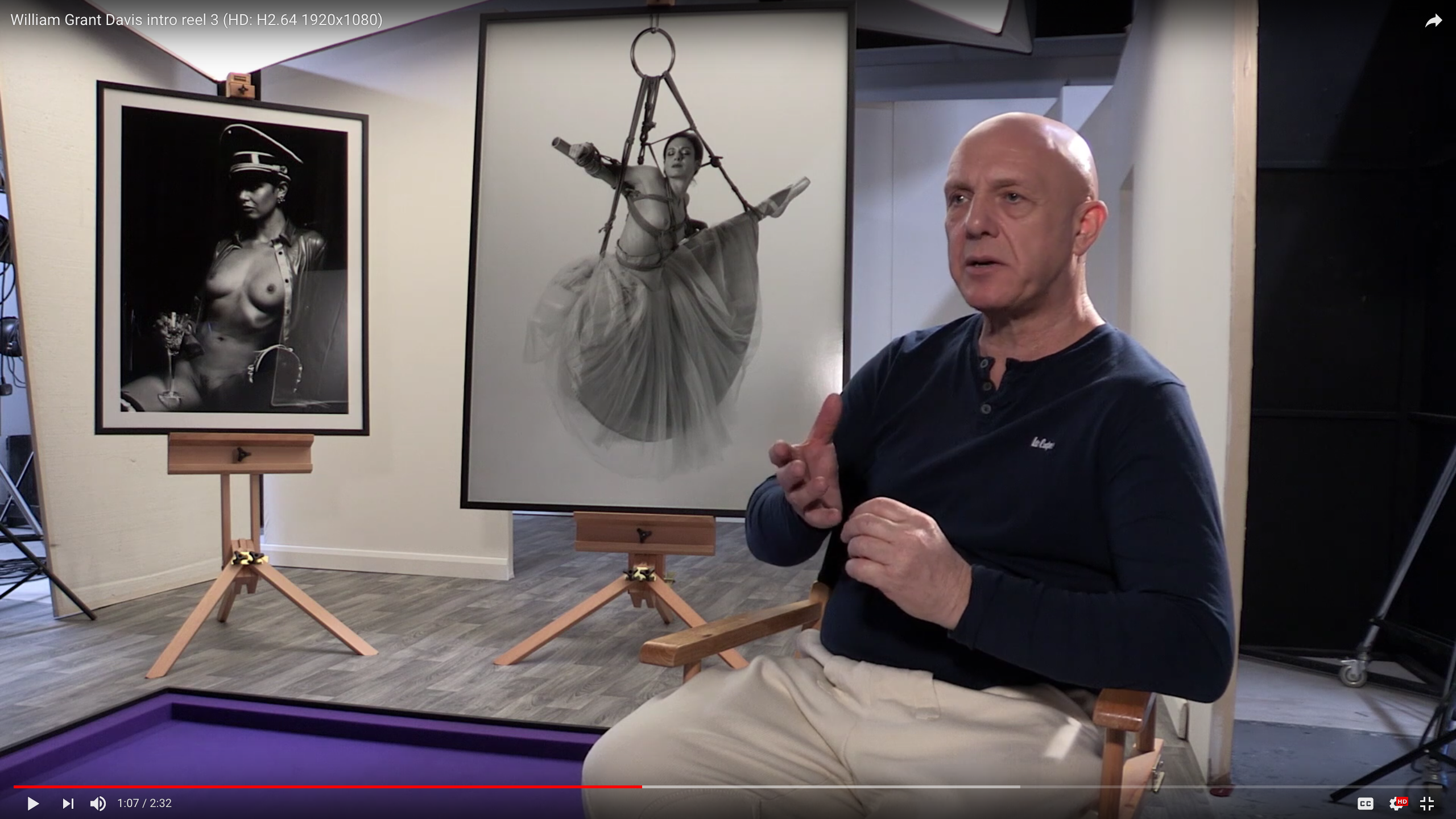
This new website of Grant’s work features images that hitherto have been rarely exhibited or come from private collections of international art investors.
The portfolio section displays fine art images from the following series:
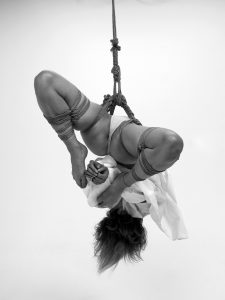
- Shibari
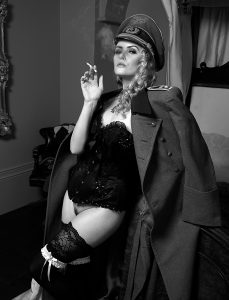
- I Come from Rothenburg
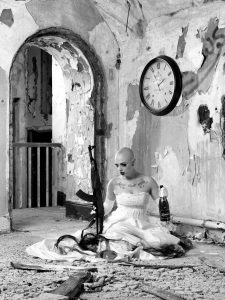
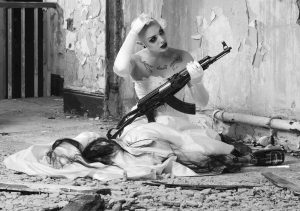
- War & Femininity
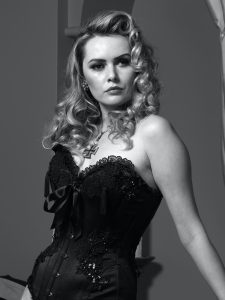
- Loveless
- Emancipation or Freedom
- Fallen Eve
- Rebel Bride
- Catalina
- Party Girl
- Belinda
- Miscellaneous
- Unseen Work – By request and invitation only
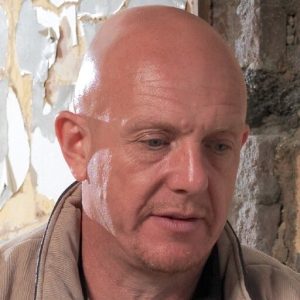



AN INTERVIEW WITH WILLIAM GRANT DAVIS
I N T R O D U C T I O N
William Grant Davis’s photographs are characterised with atmosphere and style which immediately identify his work.
Over the last 39 years his photographs contain celebrations of feminine imagination, fantasy and spirit, sparkling with eroticism and provocative sensuality. William Grant Davis’s work is a rare example of that perfect and intriguing symbiotic relationship between, photographer, model and viewer. His fine art images capture a special fleeting moment – with a total dedication to storyline and a meticulous eye for detail absolutely necessary for creative excellence.
In this interview, William Grant Davis describes his artistic approach – and explores what makes his photographic art so especially provocative and unique in today’s international art world.
How would you primarily describe yourself, Artist or Photographer?
I have a foot in more than one world, my mind is like a picture book. The images I see, feel and hear in my mind are as real to me as they are in the physical world. I move those images from the mind and bring them into physicality, and so I suppose primarily I am a creator, that transforms what is perhaps no-thing into something, using photography as a medium.
Having enjoyed nearly four decades of successful photography, you are approaching a pinnacle of excellence and your growing reputation and sales in the art world appear to confirm this. Is there a simple explanation?
William Grant Davis (WGD): “Yes! I’ve been very fortunate to mix and meet interesting people from different parts of the world, who have become personal friends and discerning patrons. In some of the most esteemed art circles; there are private international collectors and aficionados who understand my artistic approach to erotic art photography, the use of story-telling in my images that is rooted in history and captures significant and sensual moments in time.”
Describe your approach to the female form – what delights you and has resonance with your audience
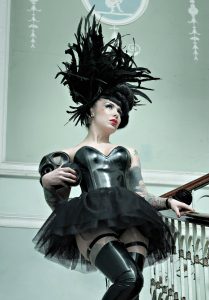
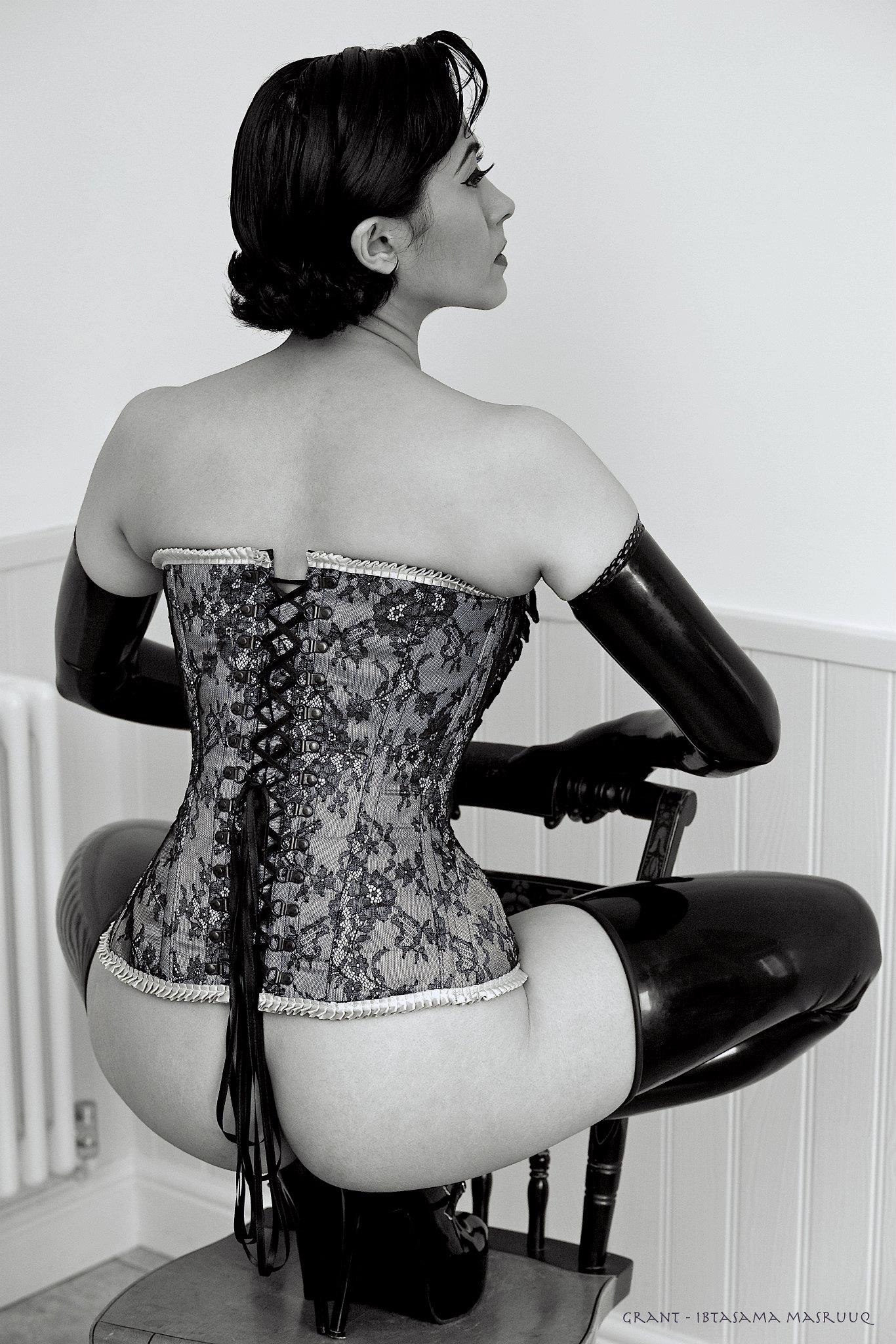
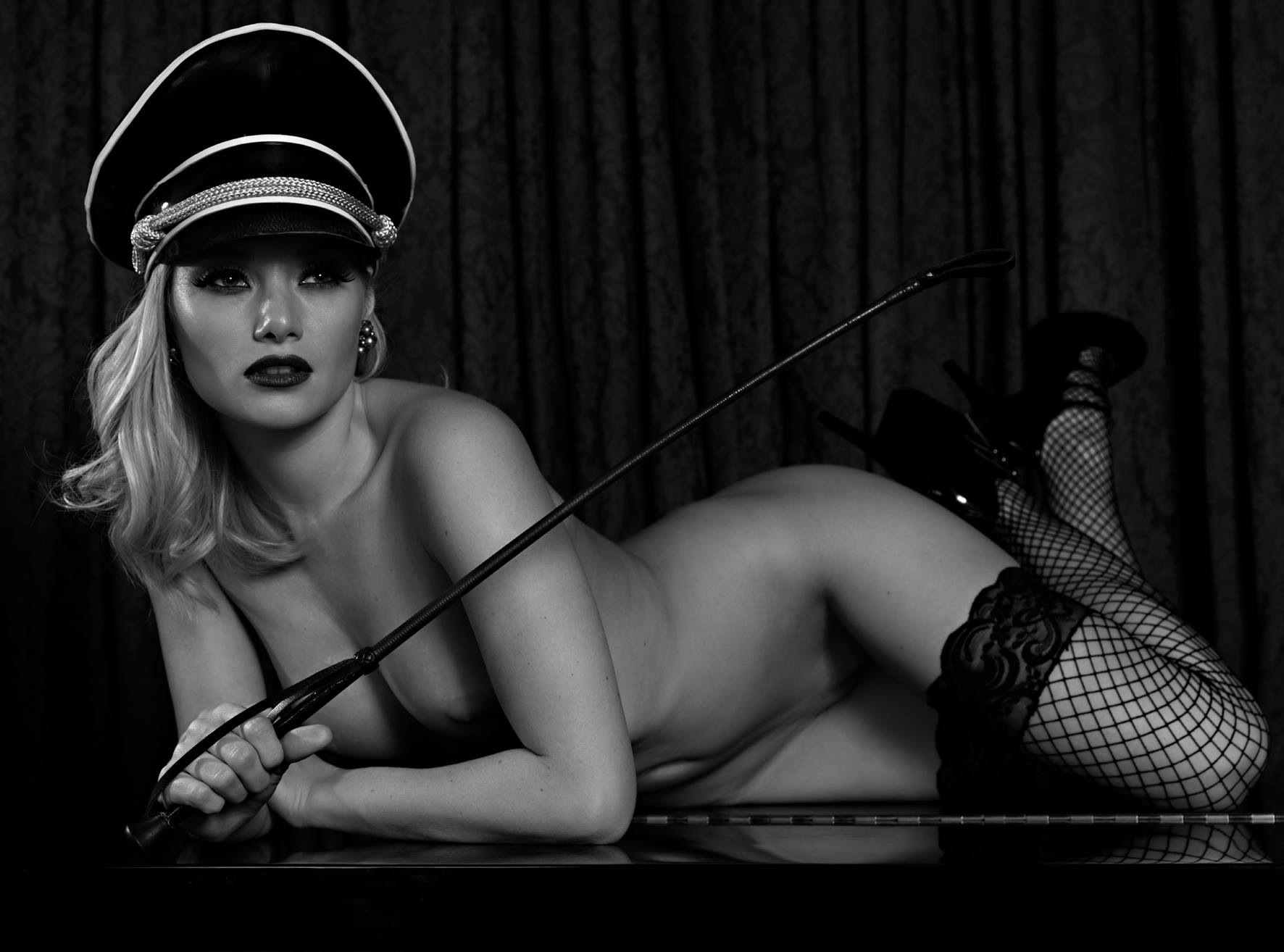
WGD : “I’ve always been fascinated and a great admirer of strong confident women – women of character and with a story or past to tell. The models I ask to pose for me understand the relationship and role they are to play and fully submerge themselves in the experience. The pictures I capture are of nudes or semi-nudes, usually in classic black and white – or muted colour tones. Images that suggest a storyline – sometimes a narrative stepped in history and deep resonance in the emotional power play that can come from erotic situations. The use of strategic props and detailed rooms settings create a storyline and narrative for the viewer to enter and explore.”

Do you like to shock, and is there sometimes an element of tension in your images that divides opinion?
WGD : “I think if one is dedicated to one’s art there is always something that might be deemed strident or provocative. You are questioning the viewer and the viewer is – by default – questioning him or herself and having an emotional dialogue with what one perceives in a piece of work. I like to ask or pose questions to the viewer and sometimes viewers will enjoy mixed emotions about some my work. I don’t set out to intentionally shock and neither are the photographs intentionally made to upset, offend or cause an adverse reaction. Now, perhaps more than ever, the notions and boundaries of taste, exploitation and morality is stridently debated across many mediums – but what is paramount is I believe the concept and (absolute) right to freedom of expression, obviously within the law and the art world and to be aware as much as possible of cultural communities’ sensitivities across the globe.
How do you square this when some people might be offended viewing your images?
WGD : “It is obvious that Self-expression and Free speech by default must include the right to offend. I had recently been reprimanded by Facebook for nudity and for displaying offensive content. The fact that a male nipple is deemed acceptable by the Facebook censors whilst a female nipple is considered a breach of their standards (therefore obscene) is manifestly discriminatory and sexist.
Furthermore as a Human Being and a creative using photography as a medium I have the natural right to self expression through Art.
Self expression through Art is grounds to convey ideas and emotions that we may not have the words for and find difficult to articulate.
In recent times Lord Justice Bean and Mr Justice Warby ruled that “Free speech encompasses the right to offend, and indeed to abuse another”, adding “Freedom only to speak inoffensively is not worth having.”
They said it would be a “serious interference, with the right of free speech if “those wishing to express their own views could be silenced by, or threatened with, proceedings for harassment based on subjective claims by individuals that felt offended or insulted.”
In addition to the above, and these are indeed my own thoughts, “if God is the most high and omnipotent, omnipresent and omniscient and we as Human Beings we’re created in his own image, how can anyone be offended by any part of the Human Body when it is a creation of God. Being offended by any part of the Human Body surely must mean that it is indeed God who has offended those who feel offended, and how can God offend, when God is omnipotent, omnipresent and omniscient”?
Being offended by what someone see’s or hears is an emotional response, and we can all indeed learn from those emotional responses. Surely if someone feels offended by what they have seen heard or read, then they would benefit by far, from questioning what it is within themselves that makes them feel offended, and then work on themselves to overcome that emotional reaction.
The dogma that has been put in place by certain social media platforms is in itself a paradox as any form of dogma is an infringement of our freedom of speech and self-expression.
We were all born naked, and for some reason we are the only species on the planet that finds the need to cover up its natural form, to avoid offending others.
What do you consider makes a good photograph – and how do you capture the provocative passion of a moment in time.
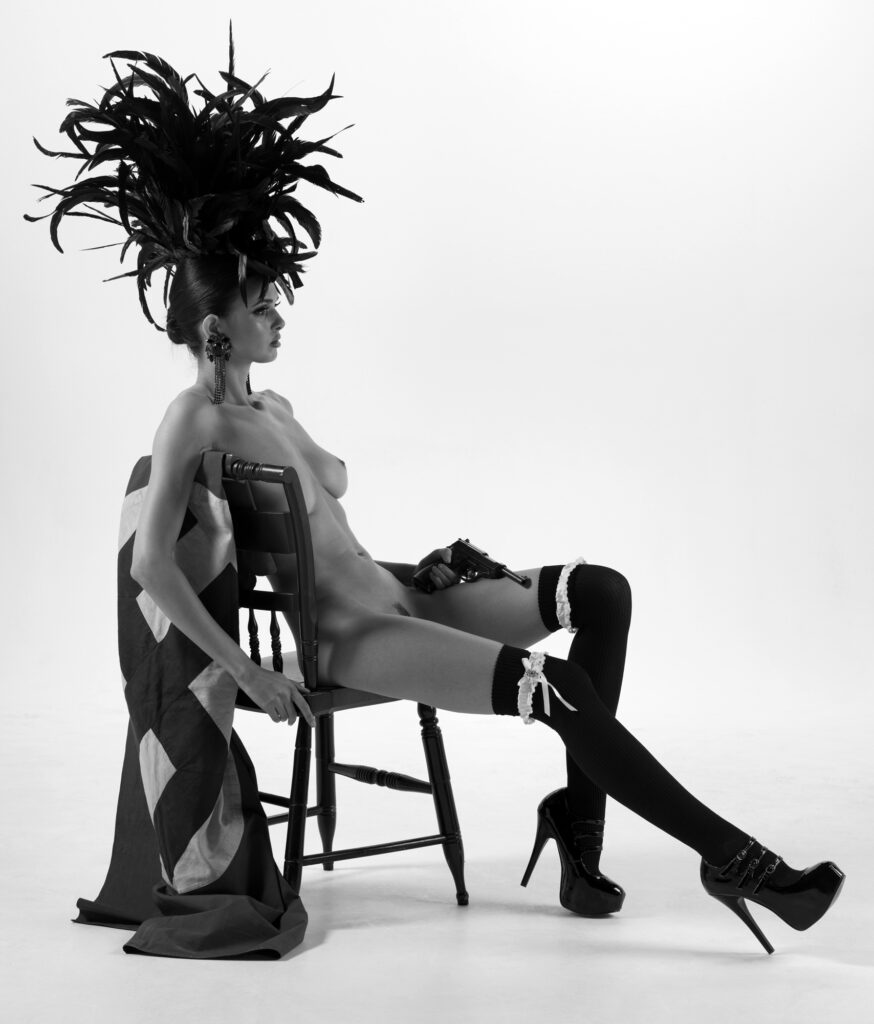
WGD : “For me, the art of great photography is life affirming, passionate . . . and the sharing of emotion and capturing intense feeling is paramount in my creativity … A good photograph is one that speaks to you.
Expression is key in creating the magic of a situation, frozen in time . . . Expression can be hypnotic.
For me the connection with the model is of paramount importance, the model needs to be able to visualise and feel the narrative being given. Within a few minutes behind the camera, I know whether or not there is that connection.
This obviously also applies to the Makeup Artist, Hairstylist and Indeed the Lighting technician.
Tell us a little about the inspiration for your images?
WGD : In the Shiburi series I wanted to create a sense of restriction, acceptance, and simply being.
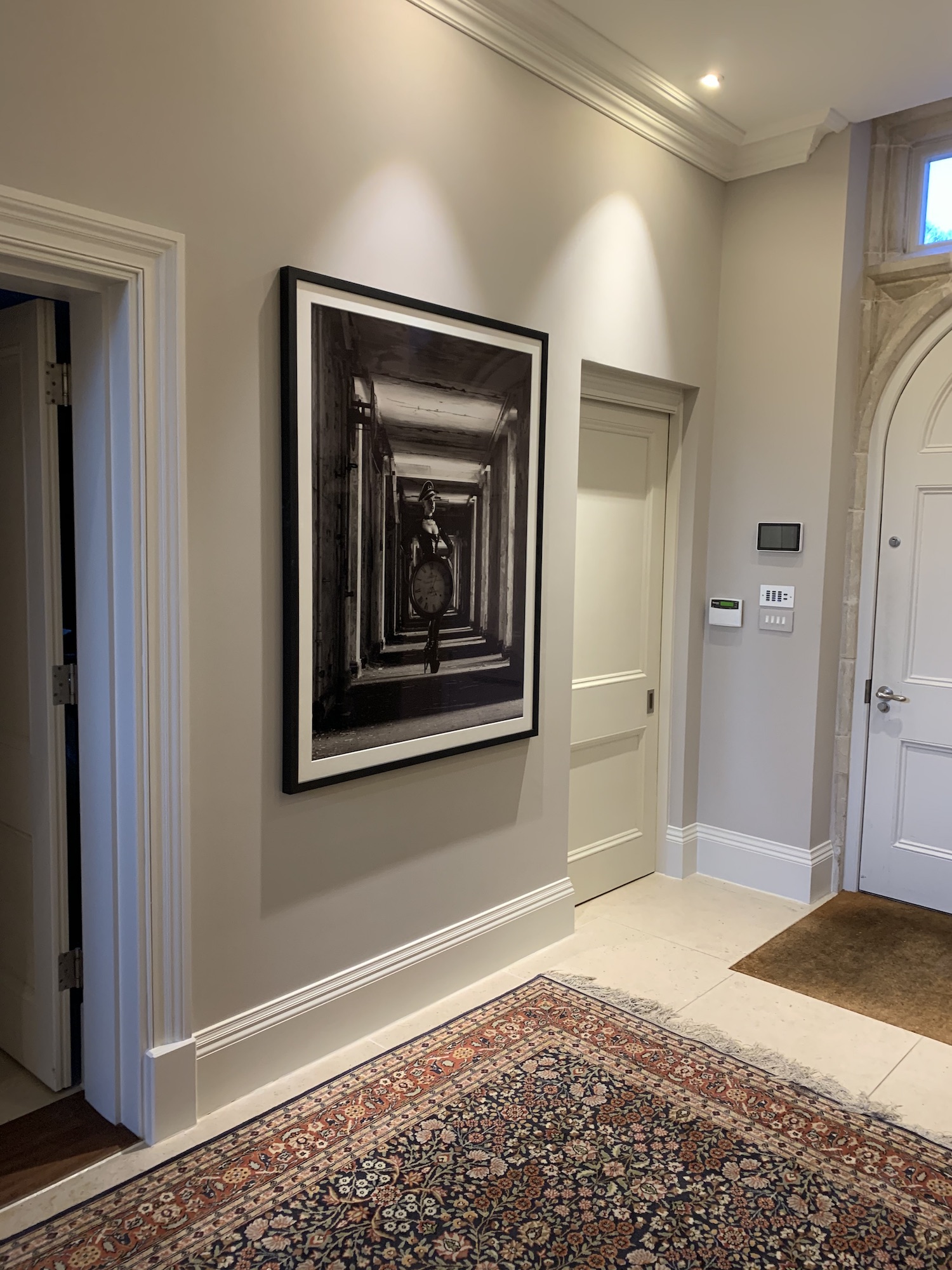
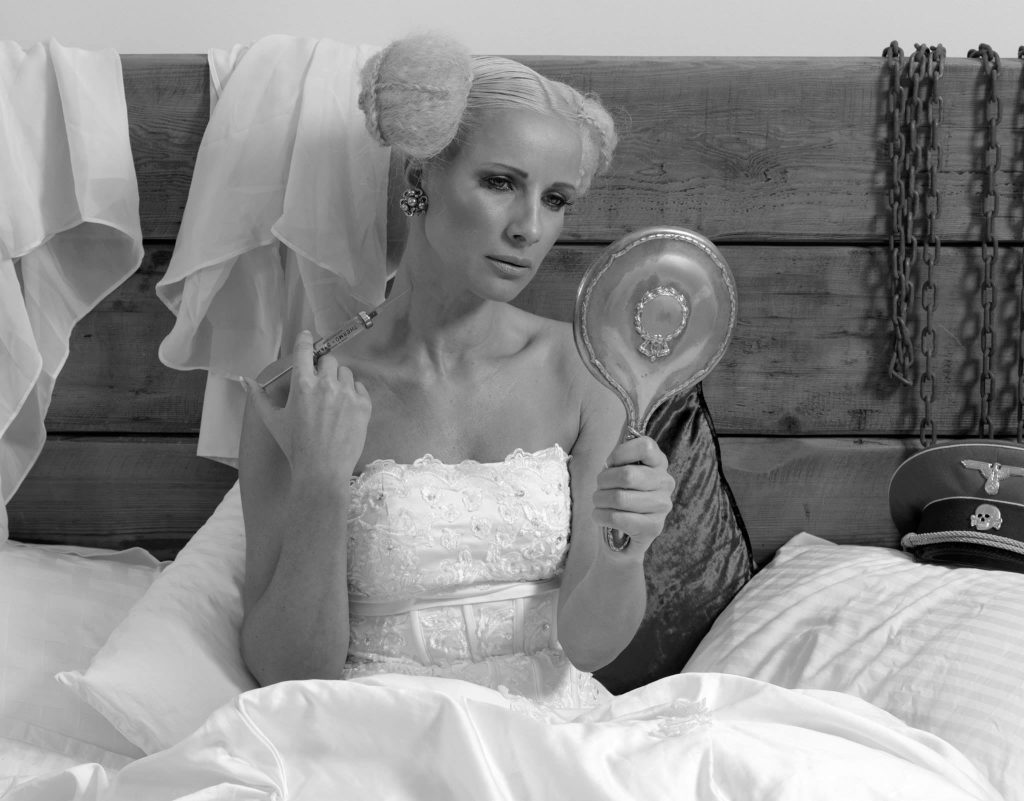
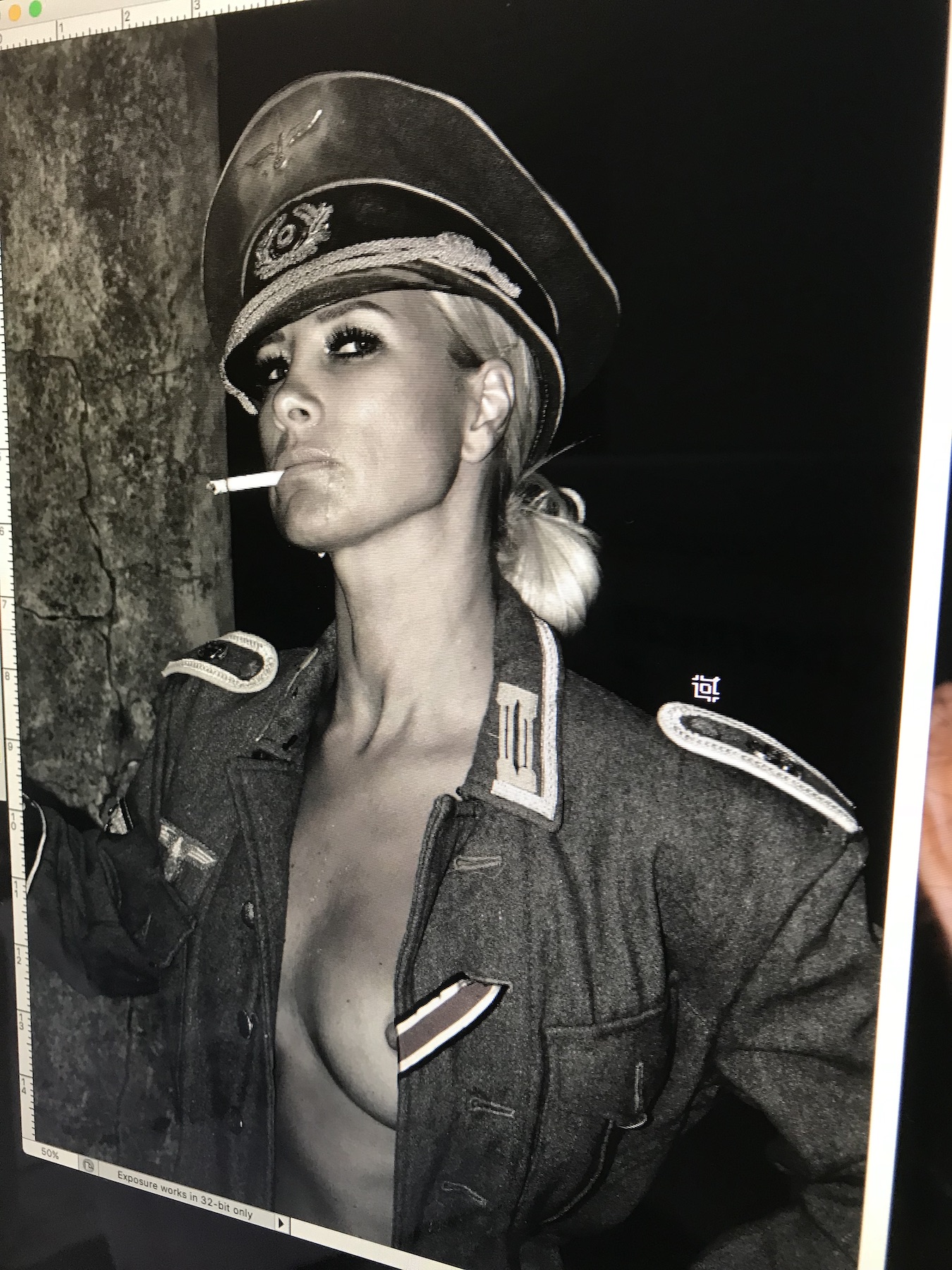
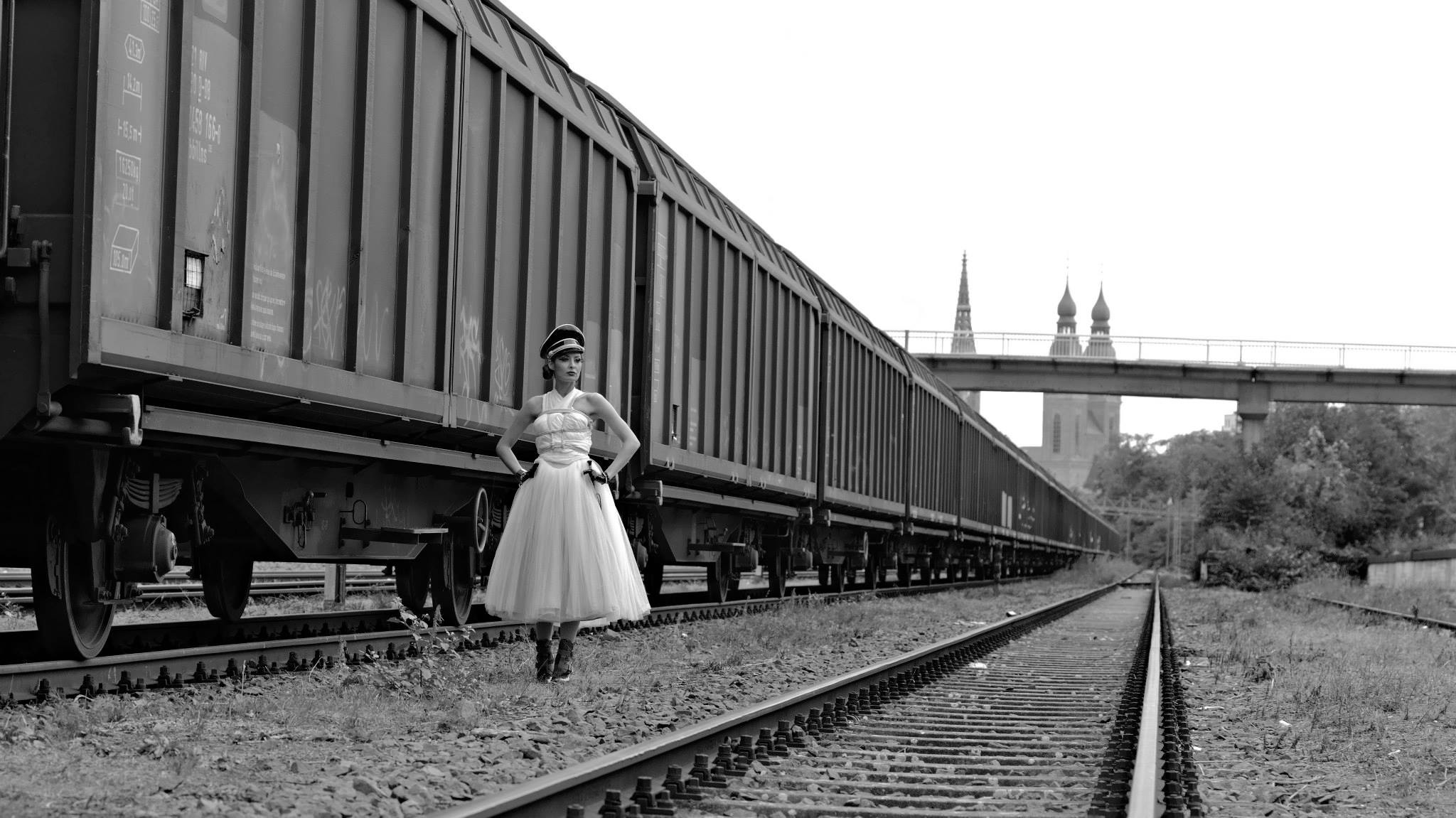
The “I come from Rothenburg” series of images stem from my keen interest in history – especially periods between the late 1800’s and mid twentieth century, for some unknown reason I have a particular passion for Germany and Austria, and in particular the German SD’s use of a salon in Charlottenburg . * The phrase “I come from Rothenburg” was a secret code name for entry into the establishment that was key in gaining information from its visitors.”
“I am fascinated with feminine power and the allure of authority and role play. The models’ I have worked with characterise a certain strong dominant force in the prostitutes of that time and place. They were clever, beautiful women who enjoyed their power and sexuality not only as being spies for the SD but also as willing and stunning sexual partners for the Salon’s clientele.
*Salon Kitty was Berlins top brothel located at No.11, Giesebrecht Strasse. It was taken over by Walter Schellenberg and Reinhard Heydrich of the S.D. (Secret Service) early in 1939. It became the very epitome of relaxation for high-ranking officers and visiting diplomats. Fitted out with hidden microphones, this sophisticated surveillance system became the main source of Gestapo intelligence. Twenty women were specially trained to work in what was renamed ‘Salon Kitty’. The brothel was managed by original owner Kitty Schmidt throughout its entire existence. In 1944 the Salon Kitty was badly damaged during a bombing raid and was moved down to the ground floor.
For the War & Femininity series I had this idea of feminising war, bringing equilibrium into what is generally thought of being a man’s world. I found something quite sexy about seeing in my mind, a women in a military coat, in a wet muddy trench, behind her an empty wire bird cage laying on its side with its door open, and there she is looking into a piece of broken mirror, applying lipstick on to a dirty face.
With the Loveless series I am challenging the dichotomy of addiction, pain, suffering and beauty. She wants to be loved, she wants to Love, but how can she give what she does not Possess, and if we are in love with the part of ourselves that we have invested in others, then who is she, what is she and why is she.
How do you plan and work out your photographs?
WGD : “I have the ability or curse depending how one views the situation to see everything, feel everything and hear everything that dwells within my mind. Some would say that I have a fertile imagination. I sometimes see things and then think I must shoot that one day, it could be that I end up doing the shoot some ten years later, however once I have seen something it becomes firmly recorded within my me and stays there. Each image is planned meticulously in advance and with great attention to detail. From the casting of the right model for the shoot, to the correct props and I am fastidious about getting the lighting just right. I try to recapture the lighting techniques that were used by the black & white master technicians in the 1930s and 1940s and the process doesn’t end there. Detail, detail in the skin, scars, blemishes, marks, dirt, tears, anything that adds to the storyline. During the course of a shoot, I do not take many shots, I know what it is that I am looking for. I never shoot for the sake of it, hoping to get something that kind of looks okay.
I sift and filter the images down to say just two or three – have them printed and enlarged to life-size and then “live with them” until, after perhaps many days, I will choose just one, single image and destroy all the remainder. This is all part of the selection and creative process and it’s what makes my photographic art so unique. It’s all about that one single image that is beautifully framed and then carefully wrapped in bubble wrap, put into a wooden case and put into storage.
Tell us about some of your technical preferences in equipment, lighting and printing?
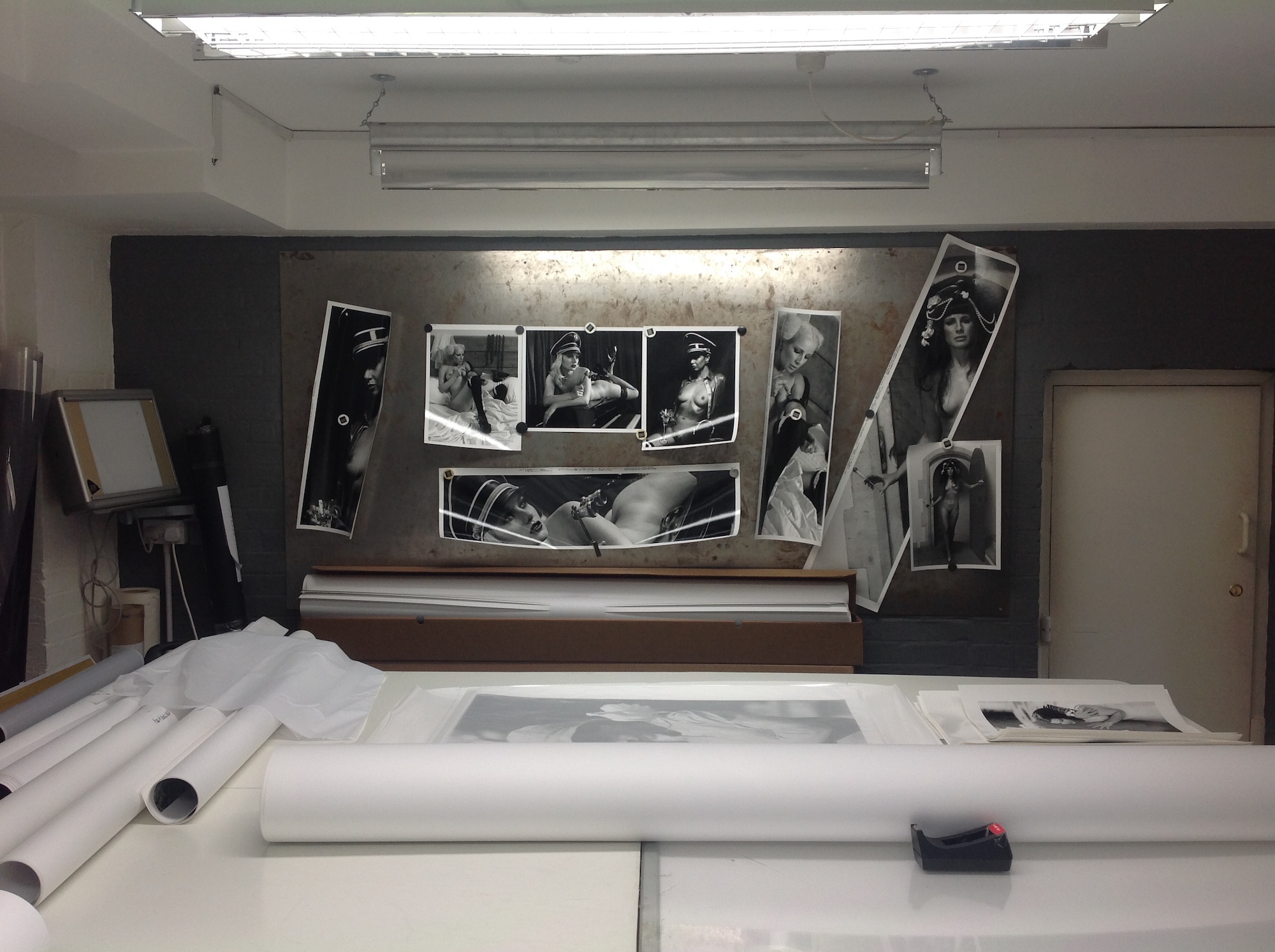
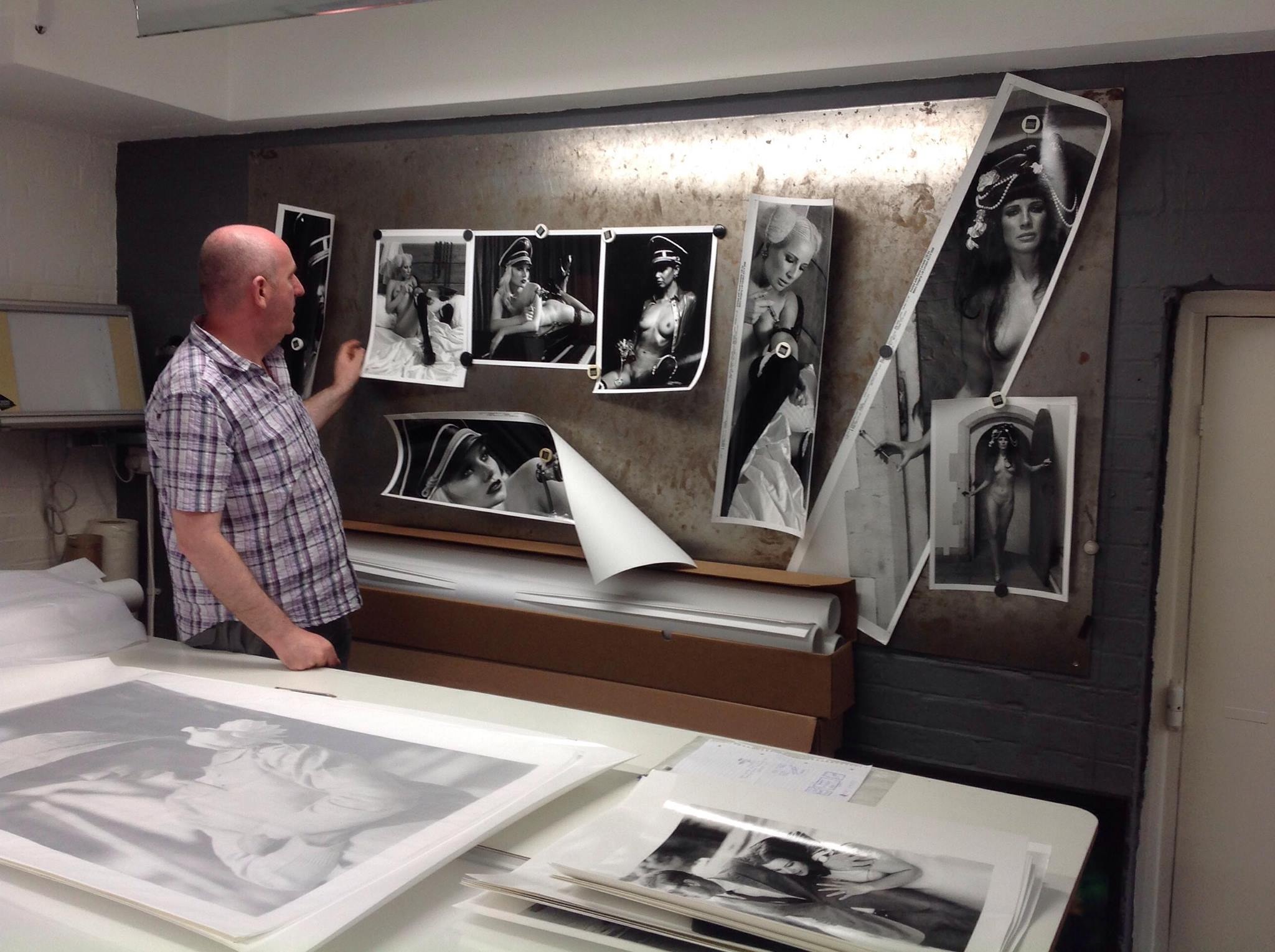
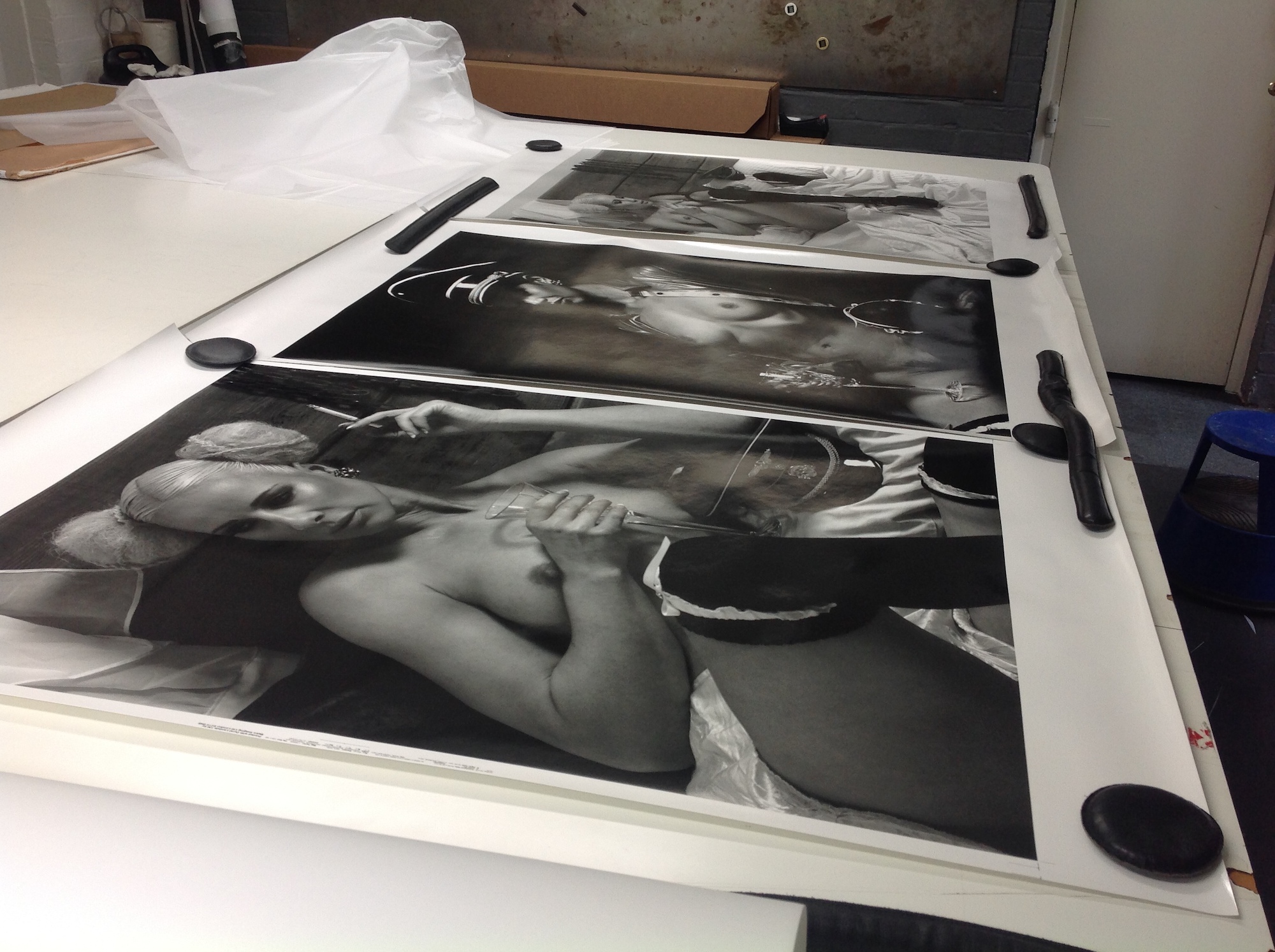
WGD : “The choice of camera is key for me and there’s only one that really stands out for sheer excellence unmatched . . . and that’s the Hasselblad HD4 50 & HD6 100. I’ve always used Hasselblad cameras since 2010. And I’ve been honoured to feature in the Hasselblad Masters Awards (2014 Finalist). The quality and detail of the Hasselblad is second to none and that’s imperative when the final art prints are enlarged to life-size and beyond.
My lighting rigs include Bronclor Move 1200L packs, heads, Para light shaping tools and soft boxes. Bronclor equipment is for me, simply the best.
When it comes to the final print image, I’ve always used Metro Imaging in Clerkenwell, London, who are masters when it comes to perfection when matching my vision for the detail and depth of tone. Metro Imaging is also the only print lab in the UK to produce true black and white Silver Gelatin prints from digital files.
How are you evolving as far as images are concerned?
WGD : “I would like to continue in the same vein—portraits of historical context mixed with the erotic to create sublime, very covetable and collectable pieces. My Mind is still full of ideas, to some they may seem bizarre, to some controversial but however ones looks at them they are erotically charged and powerful.
What’s planned and upcoming in the future ?
WGD : “I have a few selective new shoots planned for 2023. For some time, I have viewed the human body forms as shapes. For examples triangles represent the Male form and Circles represent the female form, and more recently since visiting Vienna and taking an interest in the works of Gustav Klimt and Egon Schiele, I have begun seeing Squares, which are where the Male and Female forms come together to form one, thus having the physical characteristics of both sexes. I have begun to recognise that the human form is perhaps a host or vehicle for a spirit which is neither male or female, but instead an androgynous entity that is trapped in either a male or female environment, thus creating an imbalance.
Whatever it was that I saw within Gustav Klimt’s works has laid cause for me to open my mind to think deeply about the naturally androgenous individuals within society, and this has inspired me to create a new series of work.
It may be that Egon Schiele and Gustav Klimt’s works had a totally different mindset behind their creation, but something within me was triggered after viewing their master pieces and sketches, and so in particular I am grateful to Andrea Glanninger – Leitner of W&K Gallery in Vienna and Mag. Paula Freisel at the Leopold Museum, for taking time to discuss the works of both Klimt and Schiele.
Between now and 2025, I plan to launch a new limited-edition and collectable book, entitled “An Unlimited Mind”
It will be designed as a limited edition, signed collectors item, featuring selections of work of art created between 2010 – 2025.
I have been in discussions and would like to plan a gallery show of my work in London and Vienna.
THE WILLIAM GRANT DAVIS FOUNDATION
The Greek playwright Aeschylus coined the term philanthropy in the 5th century BCE.
It meant “love of humanity.” Today philanthropy means generosity in all its forms and is often defined as giving gifts of time, talent and treasure in order to make life better for other people.
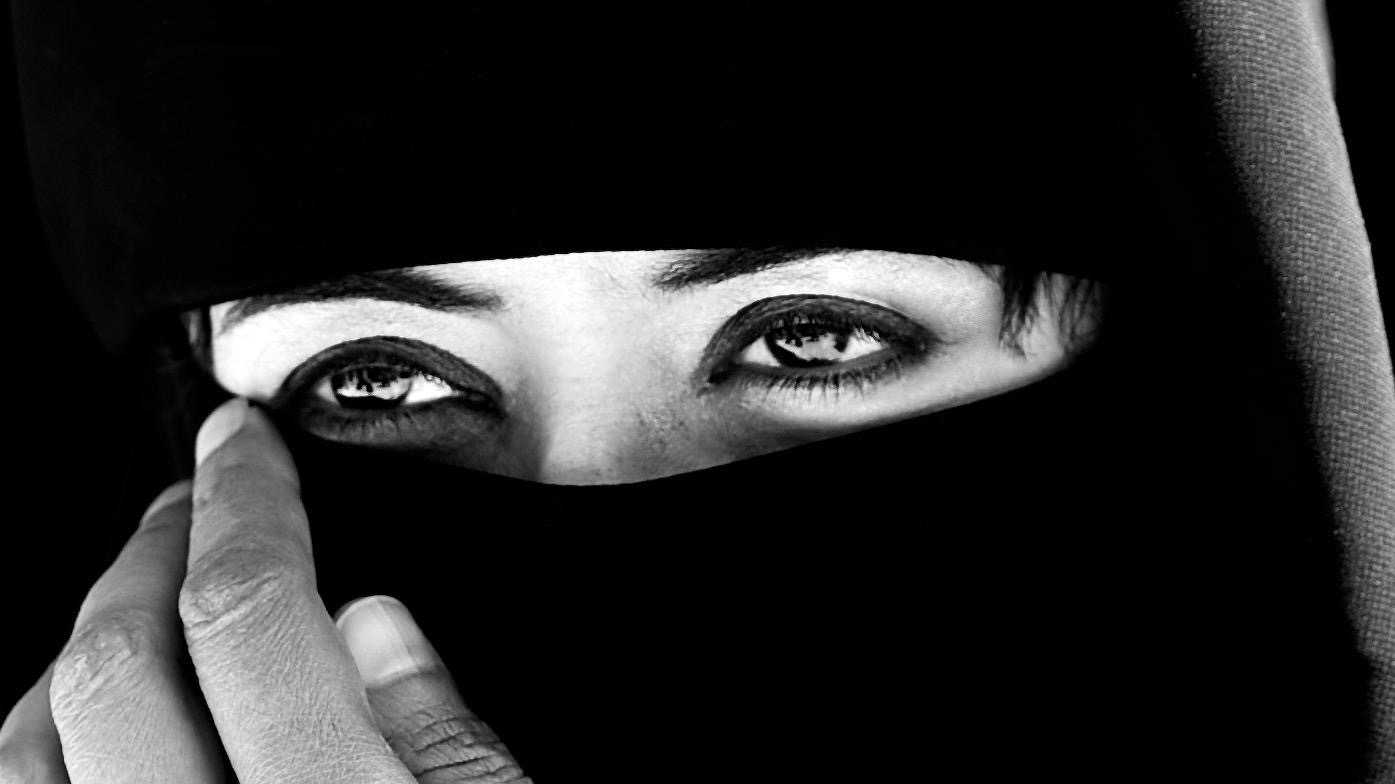
I have been going through the process of setting up a charitable organisation to help young, orphaned women in Iraq, although thus far the process has met with bureaucratic stumbling blocks along the way. I wish to create The William Grant Foundation from the proceeds / profits of art sales, and it will have the following aims.
– To help and support disadvantaged girls in a caring programme for education, health and mental wellbeing.
– With a specific emphasis on female rights and empowerment for a more equitable and independent future within their culture.
_______________